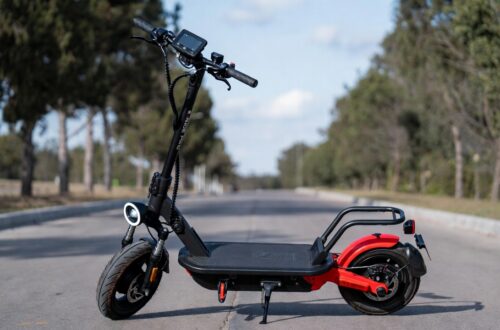
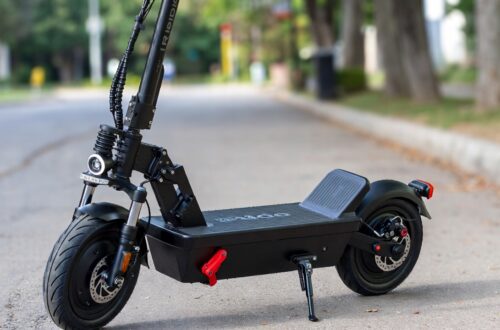
Someone at the trailhead asked if the E Ride SS was “one of those slow electric things,” and I just handed him the throttle without saying anything back. He didn’t say much after that first pull, mostly because he was too busy holding on.
Power Numbers Stop Being Abstract Pretty Fast
It’s easy to read a spec sheet and assume peak power figures are marketing inflation, the kind of number that looks good in a listing but means nothing on an actual trail. That assumption doesn’t survive contact with an E Ride Pro SS. The gap between rated and peak output isn’t decoration — it’s the difference between cruising through a neighborhood at a reasonable pace and launching out of a loose corner hard enough to need both hands fully committed to the bars.
What surprised me more than the raw acceleration was how controllable it stayed even at that output. Plenty of powerful machines feel like they’re fighting you the moment you open the throttle, snapping the front wheel up or breaking traction without warning. This one doesn’t, mostly because the delivery is smooth rather than a single violent spike, which matters more than the number itself once you’re actually riding instead of comparing spreadsheets.
Weight Distribution Matters More Than People Expect
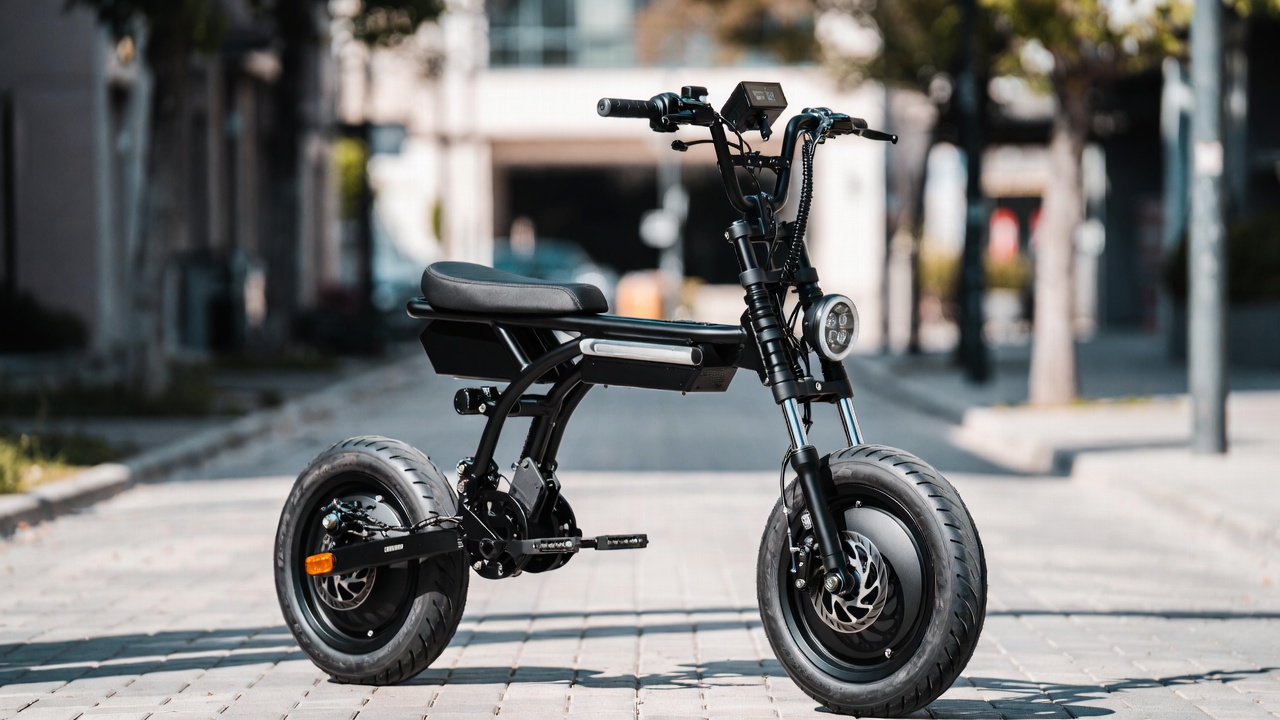
Nobody talks about this part enough, not even people who’ve owned a few different electric dirt bikes. A heavier battery pack sitting low in the frame changes how a bike carries itself through corners, and it took me a few rides to stop bracing for the kind of top-heavy wobble you get on some electric builds that weren’t designed around the extra mass. The E Ride SS 2.0 carries its weight differently — planted, not sluggish — which becomes obvious the first time you lean into a fast sweeping turn instead of a tight technical section.
Riders coming from lighter gas bikes sometimes fight this at first, expecting the same flickable feel they’re used to and overcorrecting into corners that don’t need it. That expectation fades within a session or two, replaced by an appreciation for how stable the bike feels at speed, even if it took some unlearning to get there.
A short list of things that took longest to adjust to:
- Trusting the front end at higher speed than felt intuitive at first
- Recalibrating braking distance without engine braking to rely on
- Getting used to how little sound accompanies that much power
Charging Habits Change More Than Riding Habits
The riding itself adapts fast. What actually reshapes your routine is charging. A swappable battery means the bike is never really “empty” if you’ve planned ahead, but it does mean planning ahead becomes a habit instead of an afterthought, the way checking a gas gauge used to be — except now the check happens the night before instead of at a gas station on the way out.
That’s a trade worth making for most people who ride regularly rather than occasionally. The inconvenience shows up rarely, usually only on longer days when you’re covering more ground than a single charge or a single spare battery can comfortably handle, and even then a little forethought closes the gap, the same way any habit eventually stops feeling like a chore.
By the time that first ride wrapped up, the trailhead skepticism had mostly evaporated. What replaced it wasn’t just enthusiasm about speed, but a genuine respect for how deliberately the E Ride SS was engineered to feel composed at the upper end of its range, not just fast for the sake of a number on a spec sheet — the kind of composure that only shows up once you’ve actually pushed something close to its limit.