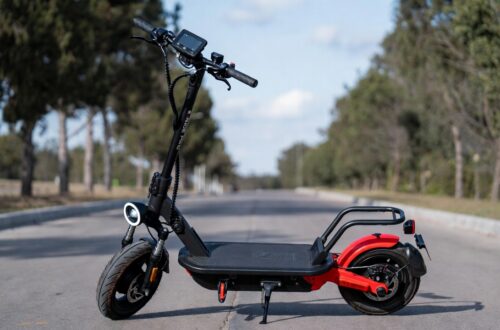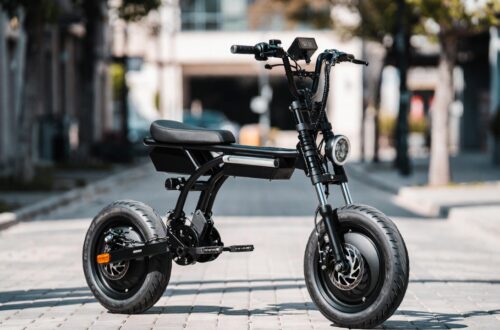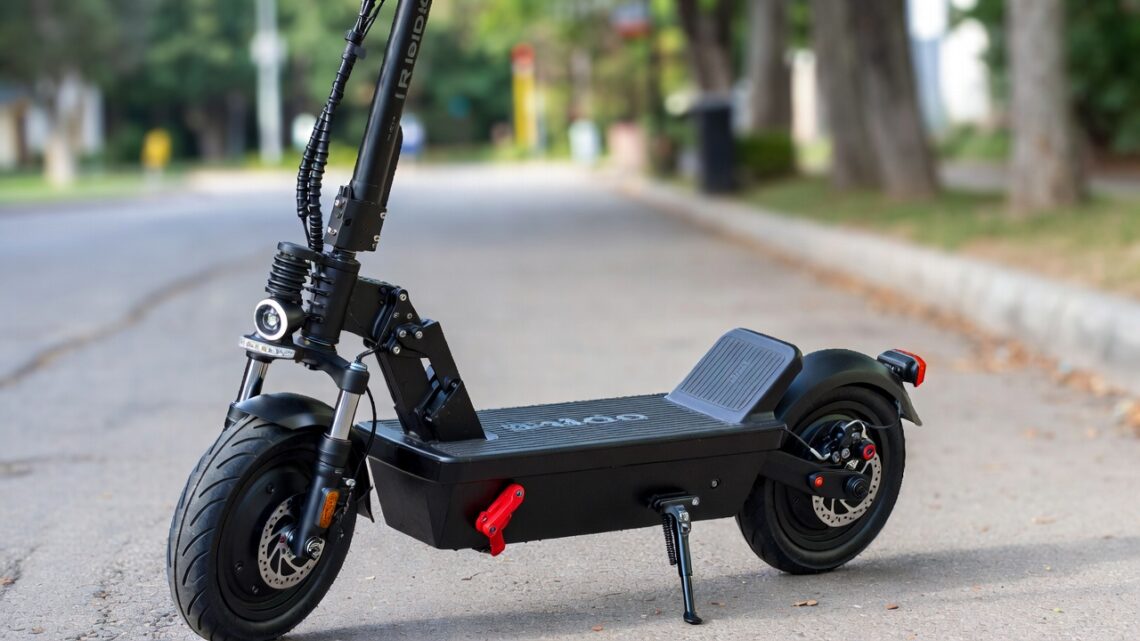
The first time I threw a leg over an E Ride Pro S, I expected something closer to a toy than a machine. That assumption lasted about four seconds, right up until the throttle answered faster than my hand finished moving, and the whole bike lurched forward with a kind of urgency I wasn’t braced for.
Size Fools You, Right Up Until It Doesn’t
Because the frame is compact and built with smaller riders in mind, there’s a temptation to underestimate it. I made that mistake on my first ride, treating it the way you’d treat a bicycle with a motor bolted on, easing into corners the way you’d coast a mountain bike downhill. That lasted until the first tight corner, where the low center of gravity and the sixteen-inch wheels turned in sharper than expected and nearly caught me off guard, forcing a quick correction that felt more like riding something built for confidence than caution.
It’s not a bike that punishes hesitation, but it does reward paying attention, in the same way any unfamiliar machine does for the first few outings. The compact chassis makes it forgiving in traffic and tight trails alike, which is exactly the point — this isn’t a machine built to intimidate, it’s one built to let a newer rider grow into it without outgrowing it in a month, or feeling boxed in once the basics click.

The Torque Curve Is the Real Story
Numbers on a spec sheet rarely tell you anything useful until you’ve felt them. What stood out riding an E Ride S for the first time wasn’t the top speed, it was how immediate the power delivery felt at low speed — no ramp-up, no waiting for the motor to find its stride, just a flat wall of torque available from a dead stop.
That immediacy changes how you approach hills. On a gas dirt bike you’re managing a clutch and a power band; here, you’re just managing throttle input, which sounds simpler and mostly is, though it took a few rides before I stopped over-correcting out of old habit, chasing a gear shift that simply wasn’t there anymore.
A few things that stood out most during that first week of getting used to the bike:
- How quiet the motor is compared to anything with a gas engine
- How quickly the throttle response corrects for wheel spin on loose dirt
- How little maintenance came up after repeated short rides
Charging Became Part of the Routine, Not an Errand
This is the part that took longest to adjust to mentally. With a gas bike, running low on fuel means a stop, a wait, a transaction — a small ritual you don’t think twice about until it’s gone. With the E Ride Pro s, it became something closer to charging a phone overnight — plug it in after the last ride of the day, unplug it in the morning, and the question of range basically disappears for anything short of a full-day outing.
Longer trips still require some planning, since a swappable battery only gets you as far as the spares you’re carrying. That’s a real limitation compared to a gas tank you can refill anywhere, and it’s the one trade-off I still notice on longer weekend outings. But for the kind of riding most people actually do — short trails, weekend loops, an hour here and there — the routine ends up simpler than the one it replaces, with fewer stops and less planning around it.
By the end of that first week, the initial skepticism about a compact electric dirt bike had mostly worn off, replaced by something closer to respect for how deliberately it was built for the rider it’s meant for, rather than trying to be everything to everyone. That’s a rarer thing than it should be in this category, where most models seem designed for a rider who already knows exactly what they’re doing.