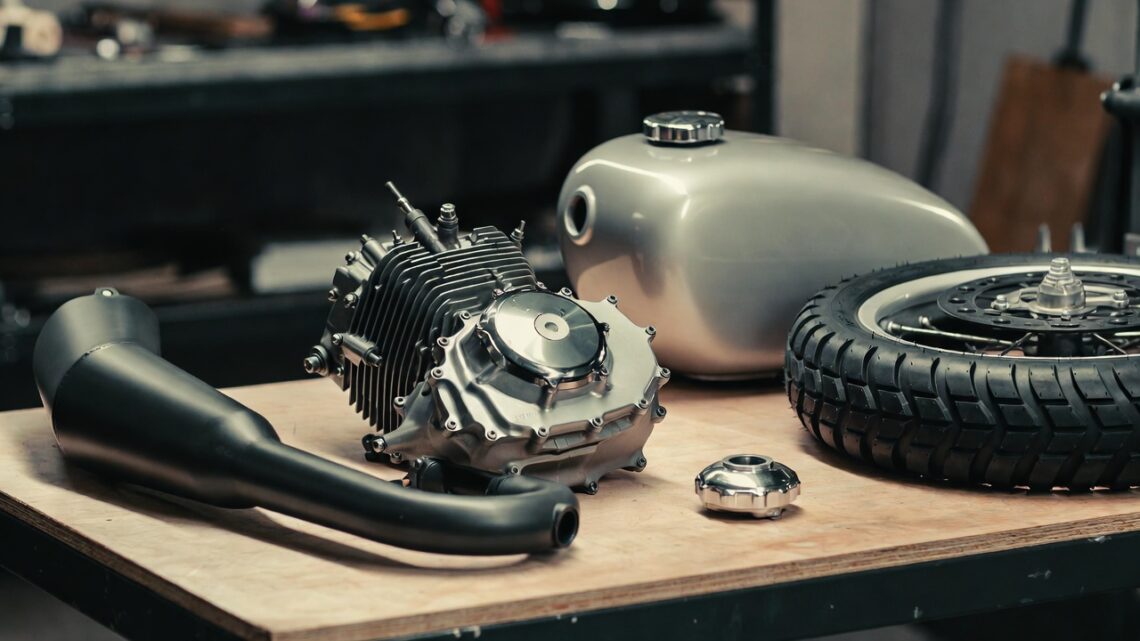
A mechanic I used to bring my bike to had a rule: before ordering motorcycle parts, he’d ask what the bike sounded like a week before it broke, not just what was broken now. Half the time that question changed which part he ordered entirely, and it saved me from replacing things that were never actually the problem in the first place.
Guessing Is Expensive
Most people don’t think about parts until something already stopped working, and by then there’s pressure to fix it fast. That pressure leads to guessing — replacing the obvious component instead of tracing the actual cause. A dead battery gets swapped out three times before anyone checks the charging system that’s been quietly killing each new one, and the shop bill keeps climbing without the actual issue ever getting touched.
It’s a pattern worth noticing in yourself if you’ve ever ordered motorbike parts twice for the same problem. The part wasn’t wrong. The diagnosis was incomplete. Slowing down for ten extra minutes with a multimeter or a service manual usually costs less than a second shipment, and it’s the difference between fixing a bike and just feeding it.
A few questions worth asking before ordering anything, especially if this isn’t the first time this month a bike has needed attention:
- Did the symptom appear suddenly or build up over weeks?
- Is this the second time you’ve replaced this exact part?
- Would a cheap diagnostic tool answer the question faster than a guess?
Buying Local Versus Buying Online Isn’t Really About Price
I used to assume ordering online always won on cost, and sometimes it does. But there’s a version of this that plays out differently than the spreadsheet suggests, and it took a frustrating month to actually learn it firsthand. A rider I know needed a gasket for an older model, found it cheaper through an overseas listing, and waited five weeks for something a nearby motorcycle parts store had sitting on a shelf the whole time — for maybe eight dollars more.
Shipping delays don’t show up in the price comparison, but they show up in how long a bike sits unusable in a garage. For anything you need working again this week, that eight dollars starts looking less like a cost and more like insurance — the kind you only appreciate after the fact.
Not All Spare Parts Are Made the Same Way
Here’s something that took me longer to understand than it should have: two parts can share a listing photo and still perform completely differently once installed. Some motorcycle spare parts are made to original tolerances, and some are close enough to fit but not close enough to last, cast from a slightly different alloy or machined with a bit more play than the original spec allowed. You usually can’t tell from a product page, and the descriptions rarely say which category a given part falls into. You can tell from how the part wears six months later, which isn’t much help at the moment you’re deciding.
Reviews help, but only the specific kind — not “fast shipping, five stars,” but someone describing exactly how a part behaved after real use, how it sounded a month in, whether it seized up in the cold. Those reviews take longer to find, buried under a pile of generic five-star ratings, and they’re worth the extra scrolling.
None of this is really about spending more. It’s about spending on the right thing the first time, whether that’s a battery, a gasket, or a full set of motorcycles parts for a rebuild — because the cheapest fix is almost always the one you only have to do once, not the one that looked cheapest on the invoice.